
Why Team Coaching Supervision? Because This Work is Hard.
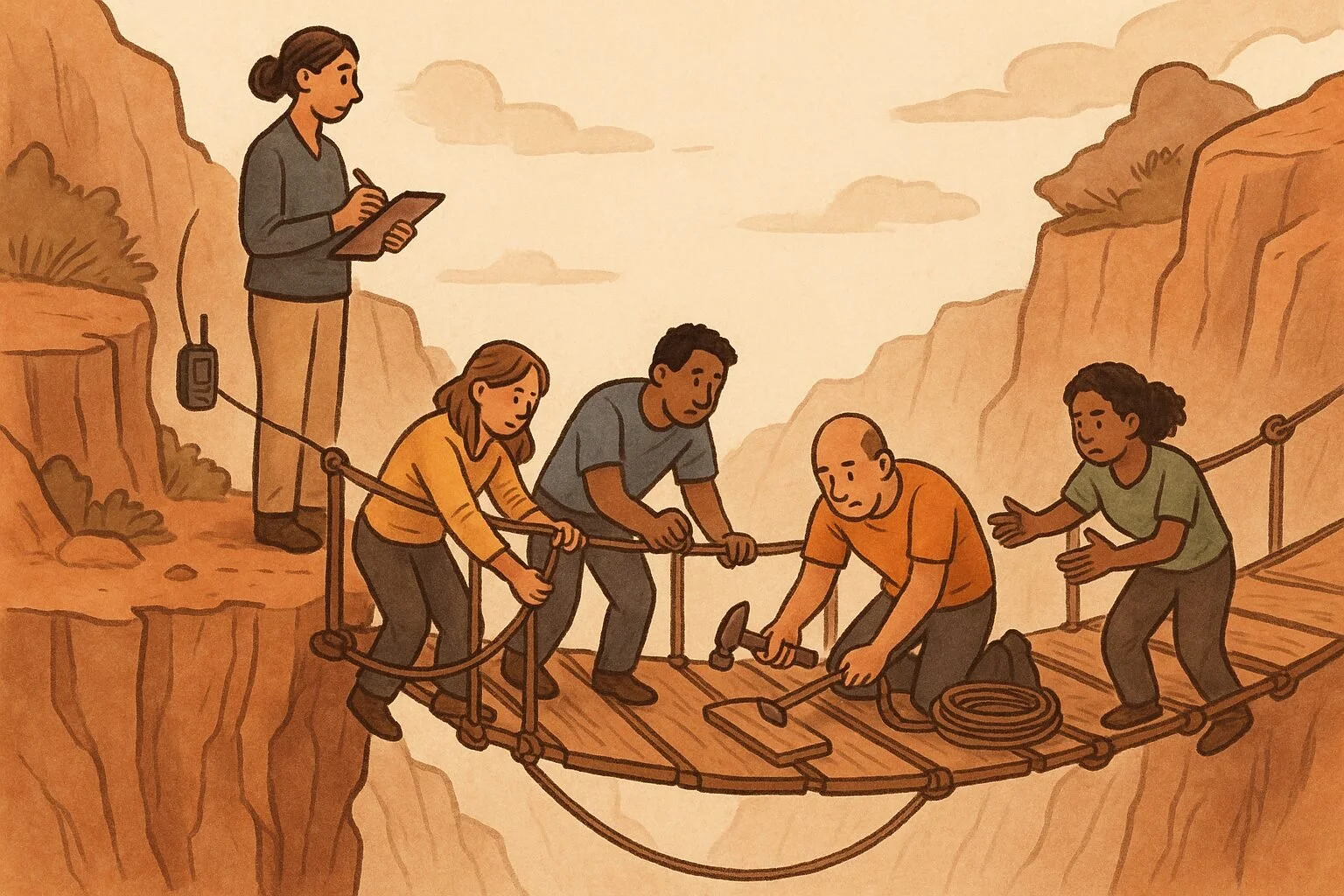
Why team coaching supervision matters and things to consider when deciding on the right supervision for you.
Working with teams is complex work. It's some of the most rewarding work you can do both from a personal fulfilment and financial perspective. It can also be hard. Really hard.
There are programmes out there designed to prepare you more thoroughly than others. Immersive, emergent training that includes extensive practice with learning designed to enable you to work in the heat of real team dynamics.
But even with the most comprehensive training, the most successful team coaches understand a fundamental truth:
the learning never stops, and the support shouldn't either.
The Gap Between Learning and Mastery
You've done a team coaching programme and returned to your coaching practice armed with new knowledge and enthusiasm, only to find yourself facing situations that don't fit neatly into the models you've learned or scenarios you've practised.
Perhaps it's a team where conflict runs so deep that every conversation becomes a battlefield. Or maybe it's a leadership group that intellectually understands what they need to do but seems incapable of translating insight into action.
In these moments, you might find yourself thinking: "The training didn't cover this exact 'thing' that's emerging in the room. What do I do now? Am I making this worse?"
We've all been there in those moments where your new found confidence as a team coach takes a knock in that moment where all you’ve learned doesn't quite stretch to the tricky moment unfolding in front of you.
This gap between learning and mastery is an understandable point of vulnerability. And it's precisely where ongoing support becomes not just helpful, but essential.
The Unique Challenges That Demand More Than Training
Consider these common scenarios that experienced team coaches regularly encounter:
The System Pulls You In: You're working with a senior leadership team, and slowly you realise you're becoming part of the very dynamics you're trying to help them address. The team's patterns of communication—perhaps conflict avoidance or power struggles—begin to show up in how they interact with you.
Ethical Dilemmas: A team member shares concerning information in confidence, but it directly impacts the team's work together. How do you honour confidentiality while serving the collective?
Complexity Overwhelm: The team faces multiple, interconnected challenges with no clear starting point. Traditional frameworks feel inadequate for the messy, evolving reality of their situation.
The Heat Gets Turned Up: As teams engage in meaningful work that matters deeply to them, emotions and stakes rise. Can you stand in that heat without getting burned or backing away?
These challenges demand more than knowledge. They require wisdom, experience, and confidence—the three things that come with practice and ongoing support.
Multiple Pathways to Growth and Support
Recognising that team coaching requires ongoing development, successful practitioners cultivate various forms of support throughout their careers. These include regular practice opportunities in safe environments, peer learning and community connections that combat the isolation of coaching work, and professional community engagement that provides structured learning and access to thought leaders. Each of these pathways offers valuable support for different aspects of your development as a team coach.
All are valid. All are important. All have a role to play. Today, though, we're zooming in on supervision.
The Critical Role of Supervision in Team Coaching
While all forms of ongoing support hold unique value, supervision has an irreplaceable position in the development of team coaching excellence.
Supervision is distinctly different from mentoring. Where mentoring is about developing your competencies, the aim of supervision is to support your ongoing personal growth and development as a team coach.
Why Supervision Matters More in Team Coaching
Team coaching supervision addresses challenges that simply cannot be met through other forms of support:
Processing Complex Dynamics: Supervision sessions in spaces held by practising team coaches provide a safe, supportive environment where you can explore your team coaching practice, address ethical challenges and strengthen your ability to manage the complexities of team dynamics.
Personal Growth and Self-Awareness: Team coaching work inevitably triggers our own patterns, biases, and blind spots. Supervision with supervisors who get how both rewarding and tricky this work can be provides a space to explore how your personal responses impact your work with teams.
Ethical Decision-Making: When facing ethical dilemmas, supervision offers a confidential space to explore options and implications with an experienced practitioner and perhaps a small group of peers who can help shed light on the unique challenges of teamwork.
Skill Refinement: Unlike peer learning, supervision provides expert guidance tailored to your specific development needs and challenges.
The Supervision Relationship
We grow best where equality is present and power is available to each and appropriately deployed, where responsibility can be negotiated and promises made and held to.
In such a relationship, what was opaque can become clear, and what has been in the darkness can be enjoyed in the light.
Quality supervision creates a unique relational container characterised by:
High Challenge, High Support: The supervisor can push you to examine difficult aspects of your practice while providing emotional safety
Professional Expertise: Team Coaching Supervisors bring both coaching excellence and a deep understanding of team dynamics
Confidential Exploration: You can safely examine mistakes, uncertainties, and professional challenges without judgment
Is Supervision Right for You Right Now?
While we believe all practising team coaches benefit from ongoing supervision, it's worth reflecting on whether this is the right time for you to begin or deepen this support. Consider these questions:
Are you actively working with teams? Supervision is most valuable when you have real cases and challenges to bring. If you're not yet coaching teams regularly, you might focus first on gaining practical experience.
Do you find yourself stuck or uncertain in your practice? If you're encountering situations that leave you questioning your approach, feeling overwhelmed by team dynamics, or noticing patterns you can't quite shift, supervision can provide the perspective and support you need.
Are you ready to be challenged about your practice? Good supervision involves examining not just what you do, but how you show up. It requires openness to feedback and willingness to explore your own patterns and responses.
Do you want to deepen your capacity to work in complexity? If you're drawn to working with senior teams facing significant challenges, or you want to develop your ability to stand in the heat when emotions and stakes are high, supervision provides essential support for this development.
Are you committed to ongoing professional growth? Supervision isn't a quick fix—it's a long-term investment in your development as a practitioner. If you're ready for sustained growth rather than immediate solutions, supervision will serve you well.
What Sort of Team Coaching Supervision Experience is Best for You Right Now?
121, group or even peer led. There’s a few things to think about. We’ve rounded up the key benefits of each style of supervision here.
Group Supervision
Small groups (typically 4-6 participants) meeting regularly with a qualified supervisor
Cost-effective way to receive expert guidance while benefiting from diverse perspectives
Offers peer learning alongside professional supervision
A chance to work with new peers or bring together a close group of peers you have previously trained with.
Example: Team Coaching Studio's Group Team Coaching Supervision (6 sessions over 6-8 weeks with up to 4 participants)
One-to-One (121) Supervision
Individual sessions with a qualified team coaching supervisor
Highly personalised attention focused entirely on your specific cases and development needs
Deeper exploration of personal patterns and professional challenges, although no input from peers
More expensive but offers maximum customisation and confidentiality
Peer-Led Supervision
Team coaches provide challenge and support to each other in structured containers
Often facilitated through professional communities or informal groups
More accessible with opt-in/out sessions as you go, though less expert guidance
Example: Team Coaching Studio's Clinic,s where practitioners bring real-world challenges to discuss with peers and faculty
Hybrid Models
Combination of group and individual supervision
Mix of expert-led and peer-led sessions
Provides both depth and breadth of support
Often, the most comprehensive approach for developing practitioners
Example: Group supervision with Team Coaching Studio, plus access to our community and regular clinics.
Key Considerations When Choosing:
Your budget, timing and availability needs
Stage of development
Specific challenges you're facing
Learning style preferences
The important thing is finding supervision that matches your needs, budget, and development stage while ensuring the supervisor has genuine team coaching expertise.
Finding the Right Supervisor
There are many coach supervisors available to choose from for one-to-one coaching, however there are relatively few team coaching supervisors who are qualified team coaches who are also team coaching practitioners, helping teams to transform right now.
When selecting a supervisor, consider:
Team Coaching Experience: Look for supervisors who are accomplished team coaches themselves, not just skilled at one-to-one coaching supervision.
Qualification and Credentials: Ensure they have both supervisory training and team coaching accreditation.
Supervision Philosophy: Look for a team coaching school that shares similar values and pedagogy that are important to you. Within that school, find the supervisor who aligns best with your learning style and professional values.
Ongoing Development: Choose supervisors who continue their own professional development and stay current with evolving practices.
A Commitment to Excellence Through Ongoing Support
The journey from competent team coach to masterful practitioner requires more than initial training. It demands a commitment to ongoing growth through multiple support channels. Whether through peer learning, community engagement, continued practice, or professional supervision, the most effective team coaches understand that development never stops.
Whether you are seeking insight into a particular challenge or looking to deepen your expertise, supervision supports your ongoing development and enhances the impact of your work with teams. And honestly? For those ready to embrace it, supervision is often the difference between coaches who thrive in this complex work and those who burn out or drift away from team coaching altogether.
At Team Coaching Studio, we understand that your development as a team coach extends far beyond the training room. We want to stand with you as you develop in your role, recognising that the most meaningful growth happens in relationship with others who understand the unique challenges of this work.
Because here's what we know: team coaching is demanding work that requires coaches who can stand in complexity, navigate difficult dynamics, and support teams through genuine transformation. This level of capability develops over time through sustained commitment to growth, supported by relationships and structures that challenge and nurture your development.
The teams you serve deserve nothing less than your continued evolution as a practitioner. And you deserve support that matches the significance of the work you're called to do. With that support, you'll grow as a coach, the teams you coach will grow, and in turn, so will your practice.
Ready to explore how ongoing supervision can accelerate your development as a team coach? Learn more about our Group Team Coaching Supervision or drop us a line at hello@teamcoachingstudio.com