
Why Team Development Doesn't Work (And What Actually Does)
The difference between a good team experience and genuine, lasting change
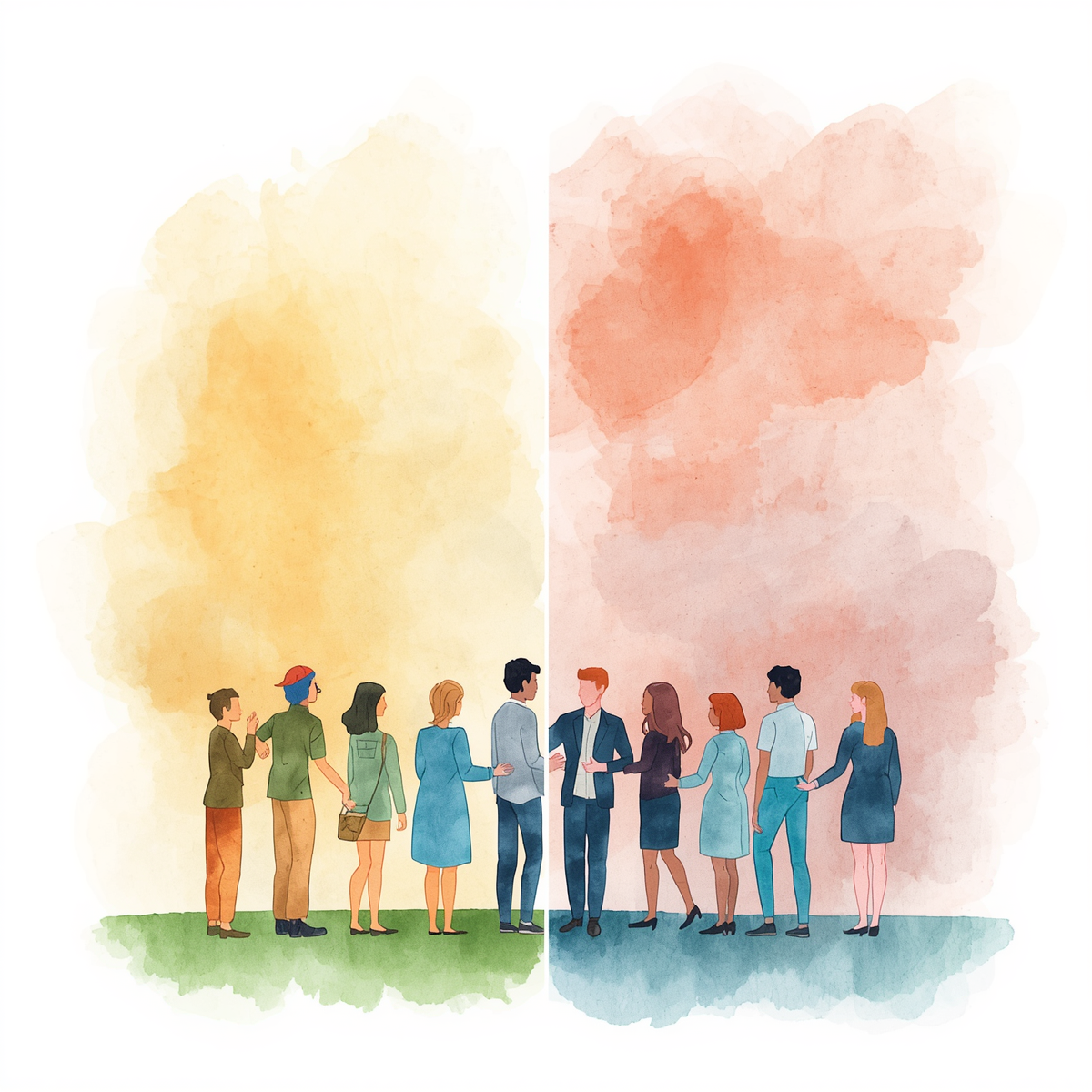
You invest in a team offsite, and for a moment, it feels like something has shifted. The conversations are more open than usual, people seem engaged, perhaps even a little braver with one another. There is a sense of connection, and often a shared commitment to doing things differently.
And then everyone returns to the day job.
Three months later, if you were to pause and look honestly at the team, what has really changed?
This is a question I often explore with senior teams, and the answer is rarely as encouraging as people would hope. Not because the team lacked intent, nor because the session itself was poorly designed, but because something more fundamental has been missed.
What many organisations are investing in is activity, not transformation. There is a subtle but important distinction between something happening and something changing.
A workshop can create movement, energy, and even insight, yet none of these guarantee that anything will be sustained once the team returns to its context. In fact, it is surprisingly easy to mistake a good experience for meaningful development. The team feels better, the conversation flows more easily, and there is often a sense of relief that certain topics have finally been aired. Yet when the pressure of organisational life resumes, familiar patterns have a way of quietly reasserting themselves.
This is not a failure of the team, it is a reflection of how change actually works in systems. As J. Richard Hackman observed in his research, team effectiveness is shaped far more by the conditions surrounding the team than by any single intervention. When those conditions remain unchanged, it is unrealistic to expect a different outcome simply because the team has spent a day or two together in a facilitated space.
One of the underlying challenges is that teams are often approached as if they are problems to be solved. If we can diagnose the issue clearly enough and apply the right model or framework, then the thinking goes, the team will improve. It is an appealing idea, particularly in organisational environments that value clarity, structure, and efficiency. Yet it rests on an assumption that does not quite hold up in practice.
A team is not a static entity that can be fixed. It is a living, relational system, shaped continuously by the interactions between its members, the wider organisational context, and the inner world each person brings into the room. When a team struggles with trust, alignment, or performance, these are not simply issues to be addressed at a surface level. They are expressions of deeper dynamics that are already present within the system. Unless those dynamics are understood and worked with, they tend to persist, regardless of how many solutions are introduced.
In many team development settings, the focus naturally gravitates towards content. There is important work to be done around strategy, roles, priorities, and ways of working together, and this often takes centre stage. However, what is frequently left untouched is what is happening between people as these conversations unfold: the hesitation before someone speaks, the moment when a challenge is held back, the subtle shifts in tone when a particular topic arises, these are all part of the team’s reality.
They are not distractions from the work, they are the work.
When these dynamics remain unspoken, they do not disappear. They travel with the team back into the organisation, continuing to shape behaviour in ways that are often outside of conscious awareness.
If there is a single capacity that distinguishes teams who are able to evolve from those who remain stuck, it is awareness. Not as an abstract concept, but as a lived, moment-to-moment practice. This is the ability to notice what is happening as it is happening, to become aware of one’s own reactions, and to stay present to the dynamics unfolding within the team. It is also the willingness to give voice to what is seen, even when that feels uncomfortable or uncertain.
This kind of awareness is not something that can be taught through a model or captured in a set of tools. It develops through experience, through reflection, and through working with real situations as they arise.
Without it, teams tend to default to habitual patterns, particularly under pressure. With it, there is at least the possibility of choice.
It is common for teams to leave a development session with a clear set of intentions. They agree to communicate more openly, to challenge one another constructively, and to collaborate more effectively across boundaries. Yet when the next high-stakes situation emerges, those intentions are often difficult to sustain. This is not because people are unwilling, but because behaviour is shaped by more than conscious agreement.
Behaviour is influenced by habit, by emotion, by perceived risk, and by the wider system in which the team operates. In moments of pressure, individuals tend to revert to what feels familiar and safe, even when they know there may be a more effective way of responding.
Unless these underlying patterns are brought into awareness and worked with directly, they are unlikely to shift in any meaningful or lasting way.
If we begin to see teams as dynamic systems rather than problems to be solved, it follows that development needs to be approached differently. Rather than a series of discrete events, it becomes a process that unfolds over time, closely connected to the real work of the team. This involves creating space not only for discussion and planning, but for reflection, for noticing patterns, and for working with what is emerging in the moment.
It also requires a willingness to engage with aspects of team life that are often avoided, such as conflict, power, and difference. This kind of work is less predictable and, at times, more demanding. Yet it is also where the potential for genuine transformation lies.
Before committing to your next team development initiative, it may be worth pausing to consider a different set of question:
What patterns in this team keep repeating, despite our best efforts to address them?
What conversations are we not having that might be shaping how we work together?
What might become possible if we were willing to look more closely at what is actually happening, rather than what we think should be happening?
These are not quick questions, nor do they lead to immediate answers but they do begin to shift attention towards the reality of the team, and that is where meaningful change begins.
Most organisations are not short of investment when it comes to team development. What is often missing is a deeper appreciation of what it takes for change to take root and endure.
It is less about doing more, and more about working differently, with greater attention to the relational and systemic nature of teams. When that shift begins to happen, development moves beyond the workshop and becomes part of how the team lives and works together over time.
And that is when something more lasting can begin to emerge.
If you are ready to work differently, we'd love to hear from you. Get in touch.
References:
Hackman, J.R. (2002). Leading Teams: Setting the Stage for Great Performances. Boston: Harvard
Business School Press.
Want to Go Deeper?
If this article has stirred something in you such as a recognition, a question, or a quiet pull toward a different way of working then we've written the book for exactly that moment.
Beyond the Blueprint: A Guide to Emergent Team Coaching is a free ebook for team practitioners who sense that their current frameworks are only scratching the surface. It explores what it really means to work emergently with teams: the principles, the practices, the inner demands, and the traps to watch for.
No step-by-step prescriptions. No new model to follow. Just an honest, experience-grounded invitation into a way of being with teams that creates genuine, lasting change.
Want to explore this further? Join one of our free 90-minute Discovery Sessions to experience emergent team coaching in action.
Want to hear real-life examples of team transformation? Listen to the Teams Transformed podcast.